
German car maker Volkswagen was the first company to offer airbags on all its variants in India from the beginning of this year.
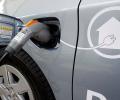
At a time when consumers increasingly embrace green mobility solutions, it is not electric cars but hybrids that are taking the lead, as automotive sales data indicate. Since January, 64,097 electric cars have been sold compared to 266,465 hybrids, according to data from the ministry of road transport and highways' Vahan dashboard. Hybrid car sales have surged from 4.42 per cent of the 4.1 million cars sold in calendar year 2022 to 7.2 per cent this year.

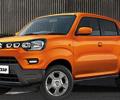
Passenger vehicle wholesales in India rose to a record high in October as companies pushed dispatches to dealers to cater to the enhanced demand in the festive season. The overall passenger vehicle wholesales in October rose to 391,472 units, up 16 per cent from 336,679 units in the same month last year. Last month witnessed the highest-ever dispatches of passenger vehicles in the domestic market by Maruti Suzuki India and Mahindra & Mahindra.

Maruti's Alto retained the top position in June with 14,856 units, as against 15,750 units in June last year.
At a time when consumers increasingly embrace green mobility solutions, it is not electric cars but hybrids that are taking the lead, as automotive sales data indicate. Since January, 64,097 electric cars have been sold compared to 266,465 hybrids, according to data from the Ministry of Road Transport and Highways' Vahan dashboard. Hybrid car sales have surged from 4.42 per cent of the 4.1 million cars sold in calendar year 2022 to 7.2 per cent this year.

Battered by the Covid-19 pandemic, the maker of the Fortuner and Innova models is staring at a steep loss in the ongoing financial year.
http://im.rediff.com/money/2023/jul/20uv.jpg

This crisis has arisen just as demand in India's auto sector started seeing some sort of revival after the nationwide lockdown in March/April.

Move to be aimed at reducing subsidies on the fuel.

Besides, Toyota and MG Motor also reported nil sales as they suspended operations even before the imposition of lockdown on March 25 to check the spread of coronavirus. In two-wheeler segment, niche bike maker Royal Enfield said it had zero sales in the domestic market but exported a total of 91 units last month.

Maruti Suzuki posted a marginal increase in January and the likes of Hyundai, Ford and Mahindra & Mahindra reporting a single-digit growth.

The measures government takes next to push economic growth will be the key for automotive sector

Maruti Suzuki India continued its grip in the passenger vehicles market in India with five of its models in the top ten best selling models in June.
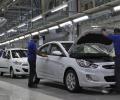
Automakers Maruti Suzuki, Tata Motors, Mahindra & Mahindra and Kia reported robust growth in their vehicle dispatches in the domestic market for August buoyed by festive demand and easing of semiconductor shortage woes. Other manufacturers like Hyundai, Toyota and Skoda also reported growth in wholesales in August as compared with the same month last year. The country's largest automaker Maruti Suzuki India said its domestic passenger vehicle dispatches increased by 30 per cent to 134,166 units in August as compared with 103,187 units in the year-ago month.
Even as some automakers limp, others charge ahead.

Leading automakers Maruti Suzuki India, Hyundai Motor, Kia Motors and Tata Motors reported sales growth in the domestic market in November, aided by robust offtakes amid the festival season. While Maruti Suzuki India reported marginal growth, Hyundai logged in its highest ever monthly sales in November. Others like Honda Cars India, Toyota Kirloskar Motor, Mahindra & Mahindra and MG Motor India also reported sales growth in November as compared with the same month last year.

Leading automakers Maruti Suzuki, Hyundai and Tata Motors on Thursday reported robust sales in March as a shift towards personal mobility and pent up demand continued to help companies push dispatches to their respective retail partners. Toyota Kirloskar Motor, Honda Cars and Mahindra and Mahindra (M&M) also reported strong sales last month as compared to the year-ago period, when dispatches were adversely impacted due to the impending transition to BSVI from April 2020 and the nationwide lockdown to contain the coronavirus pandemic. The country's largest carmaker Maruti Suzuki India said its domestic sales stood at 1,49,518 units last month. The auto major had reported sales of 76,976 units in March 2020.

Maruti recorded 20 per cent jump in sales during November.
Led by the country's largest car maker Maruti Suzuki, Ford India, General Motors and Toyota Kirloskar logged overall growth in sales volumes.

Benchmark equity indices Sensex and Nifty closed higher on Friday after two days of fall, helped by buying in metal, telecom and auto stocks amid a firm trend in global markets. Automakers led by Maruti Suzuki India, Hyundai, Mahindra & Mahindra reporting robust wholesales of passenger vehicles and GST collections crossing Rs 1.50 lakh crore for the third straight month in May also added to the optimism. The 30-share BSE Sensex climbed 118.57 points or 0.19 per cent to settle at 62,547.11.
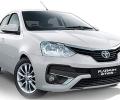
One of the smallest players in India's car market, it is banking on new-look Etios to make inroads into the personal vehicle segment

Close to 50 models were launched in India in the past 12 months, but companies have not been able to realise their potential due to the pandemic.

Clock 11% growth in the first 11 months of 2022.
BS-VI emission norms and the COVID-19 lockdown impacted the dispatches.

Industry players have sought government support in the form of stimulus package and reduction in excise duty to overcome the slump.

Led by Ajay Shriram, chairman and senior managing director, DCM Shriram, the CEO's delegation seeks to convey to their American counterparts the sense of optimism amongst Indian industry.

For players like Toyota Kirloskar and Ford, the contribution of UVs to overall sales is now well over 60%.

Buying a car, particularly a diesel-powered one, is set to pinch the customers' pockets even more from the next financial year, as the second phase of Bharat Stage VI (BSVI) emission norms kicks in. The rules require cars to be compliant with real driving emission (RDE) norms, which measure pollutants emitted by cars while they are being driven on the road, unlike in a laboratory test. The norms may increase the cost of producing diesel vehicles by nearly Rs 75,000 to Rs 80,000, and petrol-powered ones by Rs 25,000 to Rs 30,000, analysts said.

Maruti Suzuki India, country's largest car maker, on Wednesday said it will increase the prices of its entire range of models by up to Rs 10,000 from October first week, mainly due to depreciation of rupee.
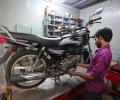
The company will utilise this time to carry out maintenance work at its manufacturing plants.
Driven by strong demand, the overall passenger vehicle dispatches crossed 3.35 lakh units in February as automakers, including Maruti Suzuki India, Hyundai, Tata Motors and Mahindra & Mahindra, reported robust sales during the month. The dispatches of more than 3.35 lakh units last month marked an 11 per cent over February 2022. It was also the highest ever overall wholesales in the month of February. The country's largest carmaker Maruti Suzuki India on Wednesday said its domestic wholesales rose 11 per cent to 155,114 units in February as compared with 140,035 units in the same month last year.
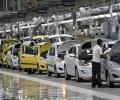
Data available from top six players - Maruti Suzuki, Hyundai, M&M, Tata Motors, Honda and Toyota - shows an average growth of about 42 per cent for the industry in June

Besides their country of origin, General Motors, Ford Motor and Harley-Davidson have another trait in common: all three have failed in India, the world's fifth largest automobile market. All three of them took a tough call to de-prioritise India as a market amid disruption from heightened regulations and sharper focus on capital allocation by the parent.

The country's top carmaker Maruti Suzuki India (MSI) on Wednesday said it has decided to advance maintenance shutdown at its two Haryana-based manufacturing plants by a month amid a surge in the COVID-19 cases across the country. The auto major was supposed to take the shutdown at its two plants in Gurugram and Manesar in June, but due to the tsunami of COVID-19 cases, it decided to take it one month earlier to save oxygen for medical needs. MSI noted that as part of the car manufacturing process, it uses a small amount of oxygen in its factories, while relatively much larger quantities are used by the manufacturers of components.

Move aimed at removing confusion among private buyers

Despite a rise in input costs, leading car-makers refrain from hiking their price.

With a new chief executive officer (CEO) at the helm, the country's largest two-wheeler maker Hero MotoCorp is now looking to cut flab and move towards a leaner organisation. It has launched a voluntary retirement scheme (VRS) for its staff as it aims to make the organisation 'agile and future-ready'. Recently, the company's erstwhile chief financial officer (CFO) Niranjan Gupta was elevated as CEO.

Honda Cars India is recalling a total of 1,338 units of its premium sedan Accord and sports utility vehicle CR-V manufactured between 2002 and 2003 to replace a faulty part in the passenger side airbags. The recall, which is part of Honda's global recall regarding the potential defect related to passenger air bag announced in June 2014, would cover 1,085 units of Accord and 253 units of CR-V.

The trend is expected to gain momentum as global vehicle makers in India, particularly from Japan, ride on hybrids to meet the more stringent fuel efficiency norms that take effect in 2022.
 © 2026 Rediff.com - Investor Information - Advertise with us - Disclaimer - Privacy Policy - Sitemap - Feedback - About us - Terms of use - Grievances